
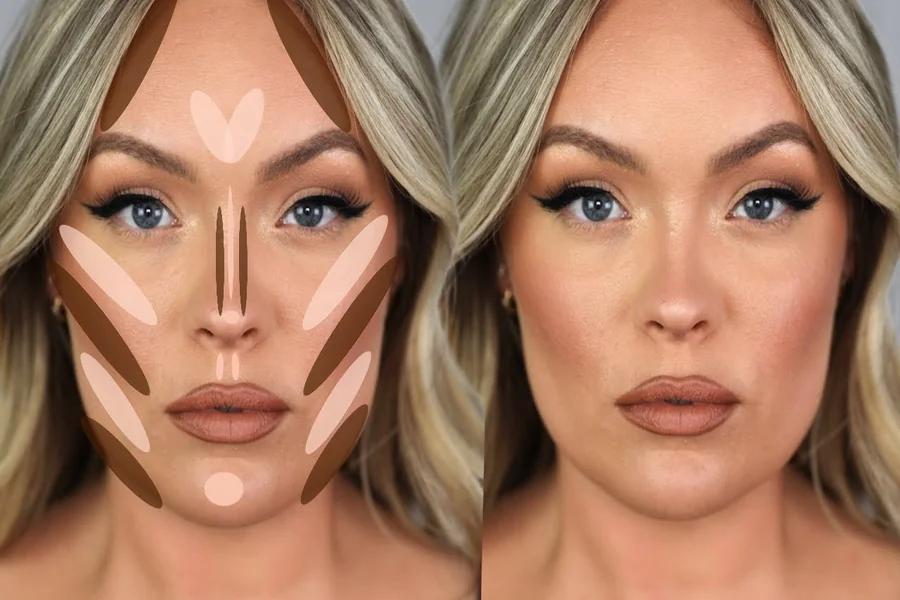
Contouring has become one of the most transformative makeup techniques available and for people with round face shapes it offers a way to create the illusion of more definition and length. A round face has similar width and length measurements with full cheeks a rounded chin and a curved hairline. Knowing how to contour round face shapes correctly uses shadow strategically to create the appearance of angles and structure that the face shape does not naturally have. The result is not about changing who you are but about using light and shadow the same way a photographer or lighting artist would to bring out your best features.
Understanding How Contour Creates Illusion
Before learning how to contour round face shapes it helps to understand the basic principle. Contour powder or cream in a shade two to three levels darker than your natural skin tone creates shadow. Shadow visually recedes making areas appear smaller or further back. Highlight in a shade lighter than your skin tone brings areas forward making them appear more prominent. By placing shadow in areas where you want to create the illusion of depth and angle you can visually elongate and sculpt the face. For round face shapes the primary goal is to narrow the sides of the face create the illusion of higher more defined cheekbones and elongate the overall shape.
Choosing the Right Contour Product
Contour products come in powder cream and stick formulas and each has advantages. Powder contour is the easiest to blend for beginners and works best over powder-based makeup. Cream contour blends beautifully into the skin for a more natural finish and works better under powder products. Stick contour is highly portable and easy to apply directly to the face. The most important quality in any contour product is the undertone. For a natural shadow effect choose a contour shade with a cool or neutral undertone rather than an orange or warm one which looks less like shadow and more like bronzer. Cool taupe and grey-brown shades are the most effective for realistic contouring.
Where to Place Contour on a Round Face
Placement is everything when learning how to contour round face shapes. The contour goes on the sides of the forehead along the hairline to narrow the top of the face. It goes along the sides of the cheeks starting from just below the cheekbone and sweeping back toward the ear in a slightly diagonal line to minimize the width of the cheeks. Applying a small amount along the jawline from ear to ear also helps sharpen the jaw and reduce the roundness of the chin area. The hollows of the cheeks directly beneath the cheekbone are where you create the shadow that makes the cheekbones appear more defined and prominent.
The Nose Contour Trick for Round Faces
Many people with round face shapes also find that their nose appears wider than they would like in proportion to their contoured cheeks. A simple nose contour adds to the overall sculpted effect you are creating. Apply a thin line of contour down each side of the nose starting from the inner brow and ending at the tip using a small brush. Blend carefully so there are no harsh lines. This creates the illusion of a narrower more defined nose that balances with the contoured cheeks. Follow with a thin line of highlighter down the center of the nose to make it appear lifted and refined.
Highlight Placement That Lifts and Elongates
Highlighting is the other half of contouring and in a round face contour routine it serves to bring attention to the center of the face and create the illusion of length. Apply highlighter to the top of the cheekbones just above where your contour begins to make the cheekbones appear higher. Apply it to the center of the forehead to create length in the face. A small amount on the center of the chin elongates the chin area and helps balance the roundness of the overall face shape. The bridge of the nose bridge as mentioned earlier and the inner corners of the eyes also benefit from highlight which brightens and opens the eye area.
Blending Is What Makes or Breaks Contour
Harsh unblended contour lines are extremely obvious in a way that makes it clear makeup was applied rather than creating the illusion of natural shadow. Blending is absolutely the most critical step when learning how to contour round face shapes. Use a clean fluffy brush and blend all edges of your contour using circular motions until there is no visible line between the contour and your foundation. The contour should look like a shadow that your face is casting rather than a stripe of product sitting on the skin. This takes practice but the improvement in how natural your contour looks after thorough blending is dramatic.
Setting Your Contour for Long-Lasting Definition
After blending set your contour with a light application of translucent or matching setting powder using a clean brush. This locks the contour in place and prevents it from fading or moving throughout the day especially in warmer weather or if you have an oily skin type. A setting spray applied over your finished look melds all the layers together and gives the skin a more cohesive appearance that looks less like layers of product and more like naturally sculpted skin. Setting your contour is particularly important if you used a cream formula which needs powder to lock it in.
Final Thought
Learning how to contour round face shapes is genuinely one of the most satisfying makeup techniques to master because the transformation it creates is both visible and versatile. You control the intensity from the most subtle definition that only you might notice to full editorial sculpting that dramatically changes the apparent structure of your face. Start with a light hand and build gradually as you get comfortable with the placement and blending. Practice with natural light to see the effect accurately and adjust based on what you see. Once you find your ideal contour placement for your specific face it becomes a natural fast part of your routine that you can complete in just a few minutes.
FAQs
Q: What is the best contour shape for a round face? A: Focus on the sides of the forehead sides of the cheeks beneath the cheekbones and along the jawline to create the illusion of length and angular definition.
Q: Should I use bronzer or contour on a round face? A: These are different products. Bronzer adds warmth and sun-kissed color while contour creates shadow for definition. For sculpting a round face shape a proper contour product in a cool-toned shade is more effective.
Q: How dark should contour be compared to skin tone? A: Two to three shades darker than your foundation shade is ideal. Too dark looks unnatural while too subtle does not create enough definition to be visible.
Q: Can I contour with powder if I have dry skin? A: Powder contour can emphasize dry patches. Using a cream contour on dry skin creates a smoother more blendable result. Make sure your skin is well moisturized before application.
Q: Is contouring necessary for everyday makeup? A: No. Contouring is optional and most suitable for occasions where you want more definition or where you will be photographed. For everyday wear a light bronzer or blush often provides sufficient dimension.
