
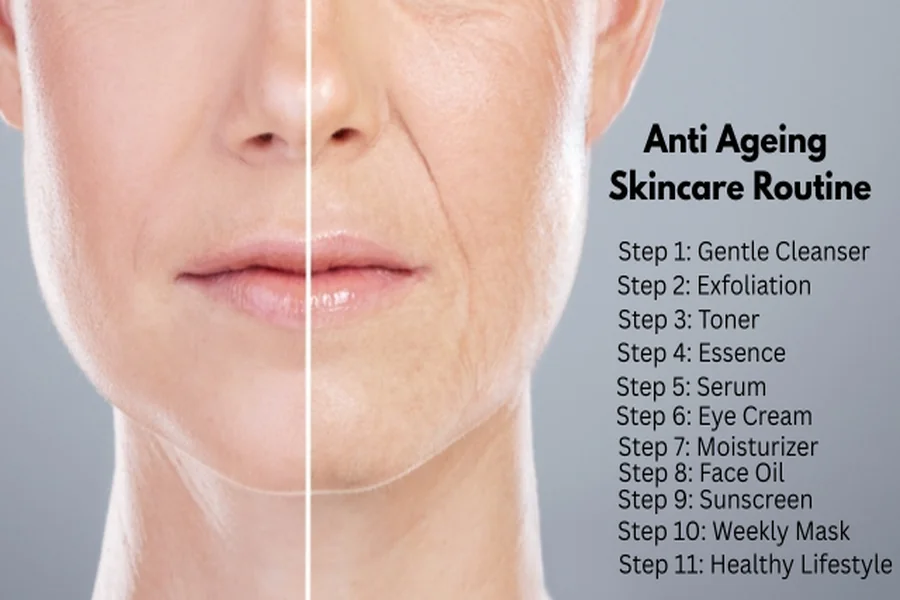
Aging is natural and inevitable but how your skin ages is significantly influenced by how you care for it. An effective anti aging skincare routine does not require a bathroom full of expensive products. It requires understanding which ingredients actually have evidence behind them and using them consistently in the right order. Whether you are starting preventively in your twenties or working to address changes you are already noticing the steps in this routine are built on dermatologist-recommended principles that genuinely deliver results over time.
Start With Sunscreen Every Single Morning
If there is one step that has more anti aging evidence behind it than any other it is daily SPF. UV radiation is responsible for the majority of visible skin aging including fine lines dark spots loss of elasticity and rough texture. This type of damage is called photoaging and it accumulates every single day even on cloudy days and even through windows. Applying a broad-spectrum SPF thirty or higher every morning as the final step in your morning routine is the single most important thing you can do for your skin’s long-term health. Modern sunscreens have improved dramatically in texture and most are comfortable lightweight and completely non-greasy making this the easiest anti aging step to maintain.
Retinol Is the Gold Standard Anti Aging Ingredient
If sunscreen is number one on the evidence list retinol is a very close second in any anti aging skincare routine. Retinol is a derivative of vitamin A that works at the cellular level to speed up skin cell turnover reduce the appearance of fine lines and stimulate collagen production. It has decades of clinical research supporting its effectiveness and it consistently outperforms most other anti aging ingredients in comparative studies. Start with a low concentration of around 0.025 or 0.05 percent and apply it at night two to three times a week. Build up gradually as your skin adjusts. Retinol can cause dryness flaking and temporary sensitivity which is why slow introduction is key.
Vitamin C Serum in the Morning for Antioxidant Protection
Vitamin C is the ideal morning serum in an anti aging skincare routine because it provides antioxidant protection against the UV and pollution damage you are exposed to throughout the day. Even when worn under SPF it adds an additional layer of defense that sunscreen alone cannot provide. Over time vitamin C fades existing dark spots and hyperpigmentation by inhibiting melanin production and it stimulates collagen synthesis which gradually improves skin firmness and texture. Apply it after cleansing and toning and before your moisturizer and SPF. Look for formulas with L-ascorbic acid combined with vitamin E and ferulic acid for the most stable and effective results.
Peptides Build Collagen and Firm the Skin
Peptides are chains of amino acids that act as signaling molecules telling your skin to produce more collagen elastin and hyaluronic acid. They are a gentler alternative or complement to retinol in an anti aging skincare routine and they are suitable for all skin types including very sensitive skin. Peptide serums can be used morning and night and they layer beautifully with other ingredients without causing irritation. Look for formulas containing Matrixyl copper peptides or Argireline which are among the most studied peptide complexes for anti aging. While peptides work more slowly than retinol they provide consistent long-term support for skin structure without the adjustment period.
Hyaluronic Acid Keeps Skin Plump and Hydrated
Fine lines look deeper when skin is dehydrated and plump hydrated skin genuinely looks more youthful. Hyaluronic acid is a molecule that occurs naturally in the skin and holds up to a thousand times its weight in water. As we age our natural hyaluronic acid levels decrease which contributes to dullness and the appearance of lines. Using a hyaluronic acid serum daily replenishes this and keeps the skin visibly plumper and more supple. Apply it to slightly damp skin before your moisturizer to maximize its hydrating effect. It works in the morning and at night and is safe to layer with virtually any other active ingredient.
Eye Cream Addresses Specific Concerns Around the Eyes
The skin around the eyes is the thinnest on the face and it shows the first signs of aging most clearly. Crow’s feet loss of firmness dark circles and hollowing are all common concerns in this area. A targeted eye cream with ingredients like retinol peptides caffeine and vitamin K addresses these specific issues more effectively than a regular face moisturizer. Apply a small amount with your ring finger using a tapping motion around the entire orbital bone and give it time to absorb before applying your face moisturizer over the surrounding skin. Consistent daily use over months makes a visible difference in the firmness and overall appearance of the eye area.
Moisturizer Supports the Skin Barrier and Locks In Everything
A good moisturizer in an anti aging skincare routine serves two purposes: it provides hydration and occlusion to lock in all of the active ingredients you have applied and it supports the integrity of the skin barrier. As skin ages its barrier naturally becomes less effective at retaining moisture making external moisturization more important. Look for moisturizers with ceramides that reinforce the barrier niacinamide that supports skin function and shea butter or squalane for occlusion. Using a richer moisturizer at night gives your skin intensive support during the repair phase while a lighter formula under SPF works well in the morning.
Final Thought
An effective anti aging skincare routine does not need to be complicated or expensive. The combination of daily SPF consistent retinol use a vitamin C morning serum peptides hyaluronic acid and a good moisturizer covers the main evidence-based approaches to maintaining and improving skin health over time. Start with the basics and introduce new actives slowly. The most powerful anti aging tool is consistency and the products you use every single day add up to far more than any occasional intensive treatment. Give your routine at least three to six months to show its full results and trust the process.
FAQs
Q: At what age should you start an anti aging skincare routine? A: Prevention is most effective starting in your mid-twenties. This is when collagen production begins to naturally slow and when UV protection and antioxidants start making a visible long-term difference.
Q: Can I use retinol and vitamin C in the same routine? A: Yes but use them at different times. Vitamin C in the morning and retinol at night is the recommended approach to avoid potential irritation and maximize effectiveness.
Q: How long before anti aging products show results? A: Most active ingredients like retinol and vitamin C require six to twelve weeks of consistent use before visible results appear. Patience and consistency are essential.
Q: Is an expensive anti aging routine more effective? A: Not necessarily. The key ingredients that have the strongest evidence are sunscreen retinol and vitamin C all of which are available at accessible price points.
Q: Can anti aging skincare reverse existing damage? A: Some ingredients like retinol and vitamin C can visibly reduce existing dark spots and improve fine lines over time. Prevention however is always more effective than reversal.
